
Abstract
In the vast landscape of civil engineering, every stable and durable infrastructure project relies on the silent support of high-performance materials. Today, we focus on a flagship product known as “fiber soft rebar”—the warp-knitted geogrid.
It combines steel-like load-bearing strength with the flexibility of fiber materials. With its core advantages of high modulus and low elongation, it is steadily emerging as a new generation of key materials in infrastructure construction, laying a solid safety foundation for a wide range of engineering applications.
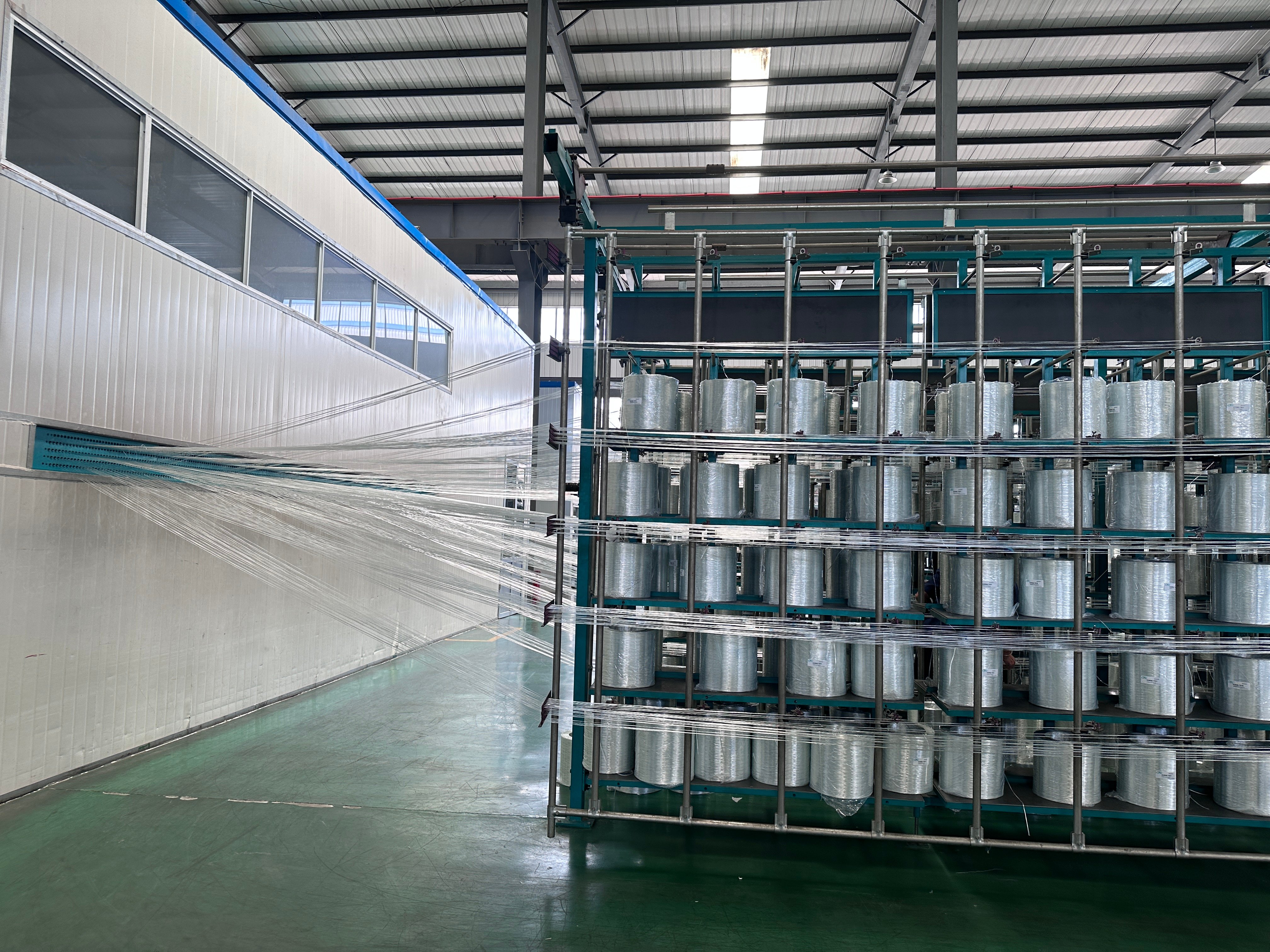
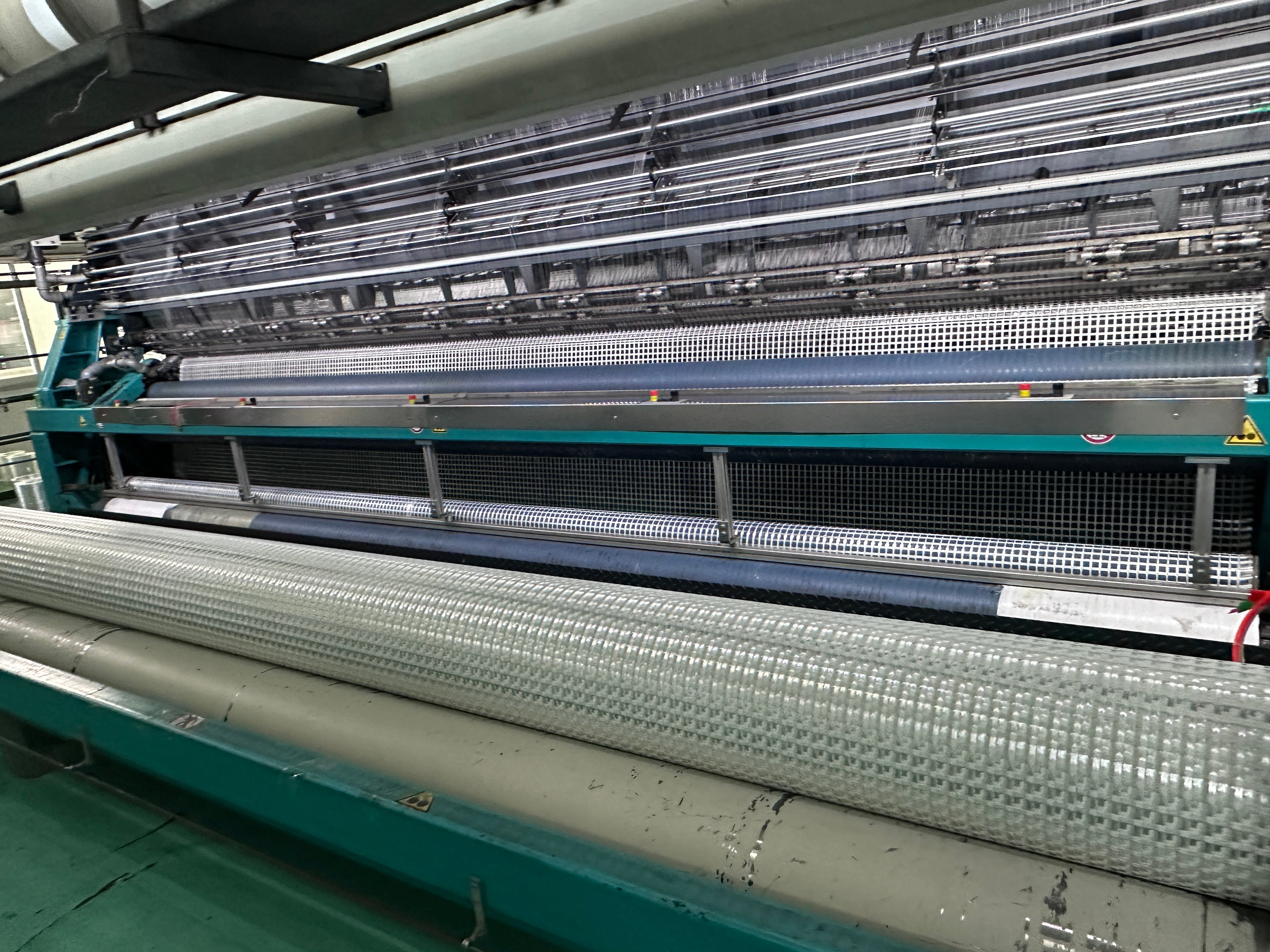
Warp-knitted geogrids are manufactured from high-performance chemical fibers using a precise warp-knitting process. The American Society for Testing and Materials (ASTM) clearly defines them as an integrally connected planar open network structure.
Its structural design is both scientific and ingenious:
the large apertures allow soil, aggregates, and other base materials to pass through the grid, forming a tight interlocking and reinforcement system within the structure. This enables the material to work integrally with the surrounding soil mass.
If conventional steel reinforcement represents “pure rigidity,” then warp-knitted geogrids are a smarter solution that combines rigidity with flexibility. Their balanced mechanical behavior is like equipping an engineering structure with a layer of fiber armor—both strong and adaptable.
Mechanical Strength
Why is it called “soft rebar”? The answer lies in its directional warp-knitted structure:
Fully Straightened Structure
During manufacturing, the primary load-bearing yarns—both longitudinal (warp) and transverse (weft)—are laid in a completely straight, non-crimped state.
No Initial Elongation
This straight configuration eliminates the initial elongation commonly caused by yarn waviness in traditional woven fabrics. Once external forces are applied, the yarns immediately bear tensile loads, resulting in an extremely high initial modulus and minimal early deformation, effectively restricting soil movement.
Zero Strength Loss
The oriented arrangement ensures that the strength of each yarn is fully utilized, allowing high-strength fibers to perform at their maximum potential.
Chemical Durability
As a buried and concealed engineering material, long-term durability and corrosion resistance are critical.
Carefully Selected Raw Materials
Typical materials include high-strength polypropylene fibers, high-strength polyester fibers, basalt fibers, glass fibers, and hybrid high-performance fibers. These materials inherently offer excellent resistance to acids, alkalis, hydrolysis, aging, and environmental changes.
Dual Protective Coating Technology
The grid surface is coated with professional protective layers such as PVC or modified bitumen. Thanks to the open mesh structure and surface roughness of the fibers, the coating can evenly penetrate and encapsulate each yarn, forming a continuous and dense protective barrier that effectively isolates chemical agents and UV radiation.
Elimination of Failure Risks
The product is a 100% non-metallic, adhesive-free knitted structure, fundamentally eliminating two of the most common chemical failure modes: electrochemical corrosion in metals and aging degradation in bonded materials.
With patented hybrid-fiber technology and a directional knitting structure, our warp-knitted geogrids effectively solve construction challenges under various working conditions, making them the preferred reinforcement solution in four key application areas:
✅ Subgrade Engineering
Highway and railway subgrade reinforcement and slope stabilization to prevent settlement and cracking.
Its high modulus acts like a structural skeleton, effectively limiting lateral displacement of the subgrade and fundamentally preventing surface settlement and reflective cracking.
✅ Soft Ground Treatment
Drainage consolidation and reinforcement of soft soil foundations to improve bearing capacity.
Thanks to patented hybrid-fiber technology, the material accommodates uneven settlement through a balance of rigidity and flexibility, avoiding sudden brittle failure and ensuring long-term load-bearing performance.
✅ Water Conservancy & Municipal Engineering
Embankment reinforcement, retaining wall backfill, and bridge abutment protection.
The fully non-metallic structure combined with professional coatings resists acidic and alkaline soils as well as seawater corrosion, ensuring the long-term safety of water conservancy facilities.
✅ Heavy-Load Foundations
Reinforcement of airport runway bases and pavements.
With exceptionally high tensile strength, it easily withstands heavy loads from aircraft takeoffs and landings as well as container stacking.
Strength through flexibility, stability through durability.
The true engineering value of warp-knitted geogrids does not lie in being “hard,” but in efficiently mobilizing fiber strength through their warp-knitted structure. Under external loads, high-modulus, low-elongation fibers rapidly engage to restrict soil deformation, while the non-metallic material system and surface protection ensure long-term performance stability.
It is precisely this combination of mechanical efficiency and durability that has established warp-knitted geogrids as the practical engineering solution known today as “fiber soft rebar.”
 EN
EN